

How important are vaccines? Is it necessary to follow the Childhood Vaccine Schedule? These are just some of the questions that new parents ask themselves in the first days of their little one’s life. In this article, you can read how it works and everything you should know about vaccines.
General Information About Vaccination
Building up immunity early
Some infectious diseases are more dangerous for infants than for older children. This is just one reason for vaccinating children early. The so-called maternal antibodies, which children receive from their mothers against some infectious diseases if the expectant mother has had the disease or is vaccinated against it, also decrease in the first few months of life. Furthermore, there are some pathogens – such as pertussis (whooping cough) – against which sufficient maternal antibodies are not developed. To prevent these pathogens from taking hold, infants should be vaccinated according to the recommendations.
Vaccinations “train” the immune system so that the body can build up sufficient antibodies against pathogens. For primary immunization, some vaccines require 4 doses at specific intervals for complete protection.
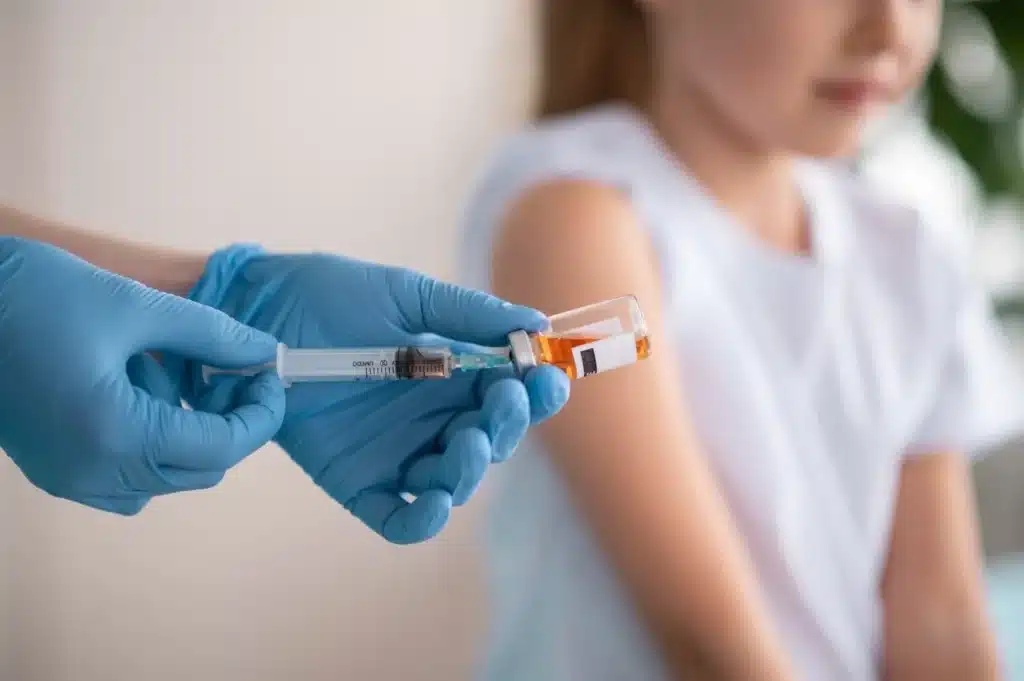
Childhood Vaccination Schedule
Polio Vaccine
Poliomyelitis, also known as polio or polio for short, spread fear and terror. People in Pakistan are still suffering from the consequences of the viral infection.
- Dose by Age:
- 1st vaccination at the age of 8 weeks
- 2nd vaccination at the age of 4 months
- 3rd vaccination at the age of 11 months
- Side Effects: In most cases, polio is harmless like a flu infection, but long term consequences of polio are post-polio syndrome: decades after the acute illness, muscle atrophy, paralysis, breathing problems, and other serious symptoms of illness occur.
- Pros:
- Lowers the risk of paralysis.
- Reliable protection from poliomyelitis
- Contribution to the global eradication of the disease
- Dose by Age:
Hepatitis
This is because the pathogens are widespread worldwide and can trigger problematic liver inflammation.
- Dose by age: The basic immunization consists of 3 partial vaccinations with a well-tolerated inactivated vaccine at intervals of 4 weeks between the first and second partial vaccination. To complete the course, vaccination is given after 6-12 months.
- Side Effects: The vaccination is well tolerated, mild and temporary vaccination reactions at the injection site can sometimes occur.
- Pros:
- Immune system reacts effectively
- Protect against virus related inflammation
Measles, Mumps & Rubella
Children in the first and second years of life are particularly at risk. Through vaccination, it is theoretically possible to eradicate measles worldwide.
- Dose by age: The first vaccination is at 11 and 14 months of age. The second vaccination is given four to six weeks after the first, usually before the second birthday
- Side Effects: Severe allergic reactions, a mild skin rash with fever, and headache may occur
- Pros:
- Protect against a highly contagious viral disease
- Strong immune system
Rotavirus Vaccine
This viral infection of the intestines occurs primarily in infants and young children. It usually begins with severe vomiting, followed by watery diarrhea. The most serious complication is dehydration.
- Dose by age: RV5 is administered orally in 3 doses, one dose at 2 months, 4 months, and 6 months of age. RV1 is administered orally in 2 doses, one dose at 2 months and one at 4 months of age.
- Side Effects: Undesirable effects are rare but include irritability, mild temporary diarrhea, and vomiting.
- Pros:
- Protecting against severe rotavirus gastroenteritis
- Protects against a disease-causing infection
Chickenpox Vaccine
Chickenpox is highly contagious and has a long incubation period. Even before the first symptoms of the disease appear, infected children can transmit it to others. For infants, a varicella infection is significantly more serious than for older children.
- Dose by Age: The first dose should be administered between 11 and 14 months of age, and the second between 15 and 23 months.
- Side Effects: Mild fever, mild chickenpox-like rash, and in extremely rare case is, pneumonia
- Pros:
- Achieving immunity more quickly
- Reducing severe complications
Diphtheria-Pertussis-Tetanus
A combined 3 in 1 booster vaccination is recommended for protection against tetanus and diphtheria.
- Dose by age:
- The vaccine is available in 2 formulations:
- DTaP for children under 7 years of age
- Tdap for people aged 7 and over mostly adolescents and adults
- Side effects: Like Soreness, pain, redness at the injection site, fever, whining, fatigue, loss of appetite, and vomiting
- Pros:
- Protect the body from diphtheria
- Minimize infection by the Clostridium tetani bacteria
- The vaccine is available in 2 formulations:
Bacille Calmette-Guérin
BCG vaccine effectively protects against pulmonary tuberculosis in children under 3 to 5 five years of age against all forms of tuberculosis.
- Dose by age:
- This vaccine is administered as a single dose in Pakistan. The dose is 0.1 ml and is injected strictly intradermally using a very fine needle. Suitable injection sites are the upper arm or thigh.
- Side Effects: As a normal reaction to BCG vaccination, a bluish-purple, pea-sized nodule develops within a few weeks.
- Pros:
- Help in improving the immune system
- Minimize risk factors against various infectious agents
Meningococcal
This vaccine can protect your children against serious illnesses, including meningitis or blood poisoning.
- Dose by age:
- Babies under two months old.
- Infants under twelve months receive two intramuscular doses at least two months apart
- Older children, adolescents, and adults only need one dose
- Side Effects: As a short-term reaction to the vaccination, redness, swelling, or pain may occur at the injection site. Furthermore, general symptoms of illness such as headache, muscle and joint pain, and fever may occur.
- Pros:
- Robust immune response in all age groups
- Can also be immunologically boosted
- Reducing the number of bacterial carriers
Pneumococcal
The pneumococcal vaccine is used to achieve active immunization and prevent illnesses such as pneumonia and acute otitis media, which are frequently caused by this germ.
- Dose by age: Three doses at the ages of two, four, and 11 months
- Side Effects: Headache, dizziness, nausea, myalgia, pain at the injection site and fatigue
●Pros:
- Effective protection against infection
- Increase hygiene measures
- Minimal risk of infection
Typhoid Vaccine
Typhoid vaccine protects against typhoid fever especially for children and people living in risk areas.
- Dose by age:
- A single dose at the age of 9 months protects for up to 5 years.
- Side Effects: Redness and swelling at the injection site with injection
- Pros:
- Effectively protected against typhoid
- Body produces antibodies against the bacteria
Human Papillomaviruses Vaccine
Vaccination offers the best protection against HPV infection and can prevent cancer in the genital area, mouth, or throat.
- Dose by age:
- Children between the ages of 9 and 14 should be vaccinated so that immunization is fully established. The vaccination schedule consists of two doses five months apart.
- Side effects:
- A headache is a very common general reaction. Other possible side effects include fatigue, joint pain, muscle pain, fever, gastrointestinal discomfort, and dizziness.
- Pros:
- Very well tolerated in the vast majority of cases
- Risk of an allergic reaction is extremely low
The Childhood Vaccine Schedule
It’s easy to lose track of things. You don’t have to calculate yourself when your baby’s next vaccination is due: During the regular check-ups, the pediatrician will check the current vaccination status and tell you exactly which vaccinations are coming up.
Despite the immunization schedule, which clearly outlines when your baby or toddler should receive which vaccinations, there is no general obligation to vaccinate. This vaccine schedule is therefore largely a well-intentioned and serious recommendation.
Frequently Asked Questions
What are the reasons behind babies receiving early vaccination?
Early vaccination schedule for your baby is to prevent him/her from any gaps in protection. That is why babies should be vaccinated early.
Are vaccines safe for my child?
Yes, all vaccinations are safe and secure, and there will be no complications during and after the vaccination
Which Child Specialist in Lahore is Best for my child's vaccination?
Dr. Ghazala Hafeez Butt is one of the best child specialists in Lahore with over 28 years of experience.
Why combination vaccines?
Combination vaccines have a good safety profile and are well tolerated. By combining different vaccines in a hexavalent vaccine, your child is protected against six diseases with just one dose of injection.

