

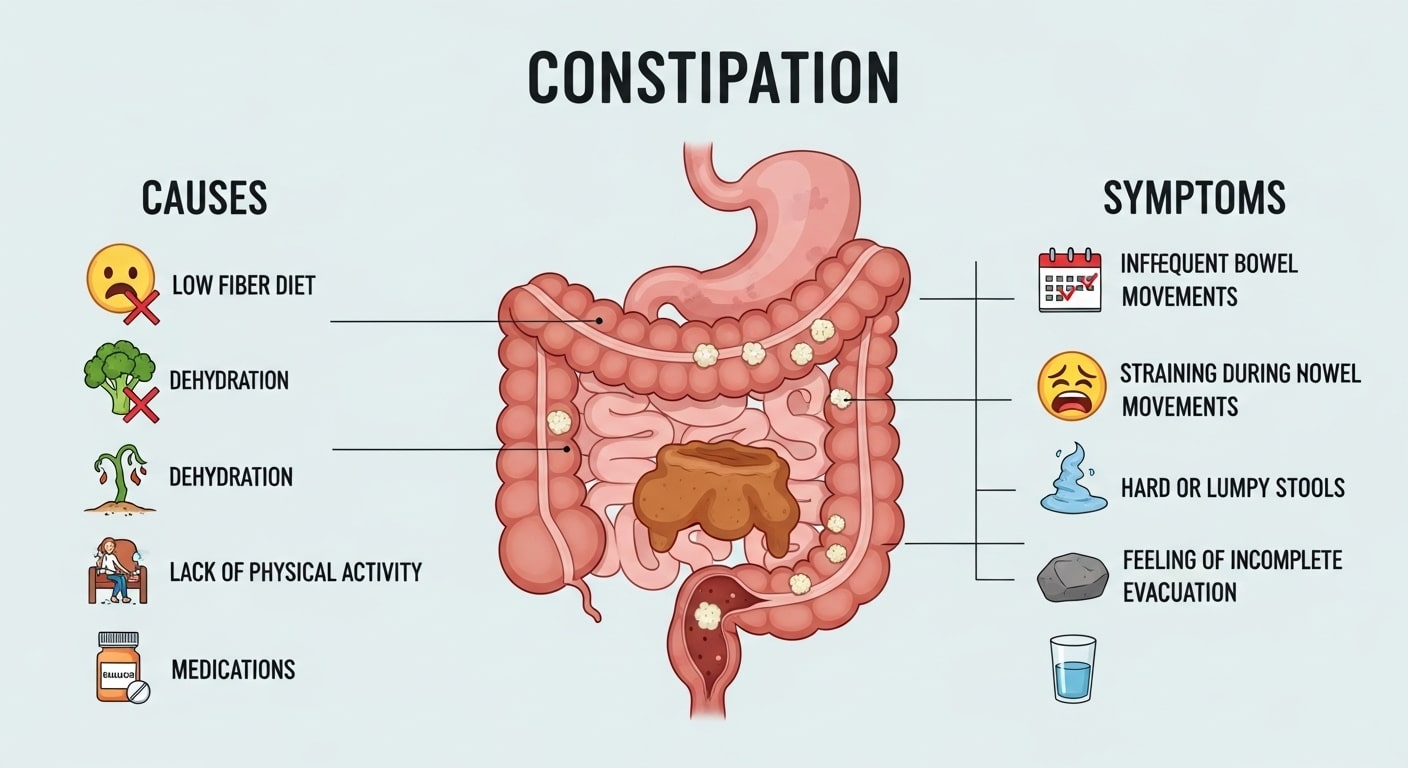
Constipation, is a common illness that affects both children and adults. It is estimated that this problem affects about 14% of the population around the world, with a frequency of 2% to 27% depending on the region and the demographic group. In this article, we will discuss how constipation made simple symptoms causes and powerful relief? And effective methods of treatment and prevention.
What types of constipation can occur?
Doctors distinguish between two basic forms of constipation:
- Acute constipation: Acute constipation with severe symptoms is caused by a more serious underlying condition that needs to be treated quickly.
- Chronic constipation: Chronic constipation therefore develops over a longer period.
Figure physiology and constipation
The proper functioning of the digestive system depends on the harmonious cooperation of many organs, including the stomach, intestines and anal sphincter muscles. Intestinal peristalsis disorder or a reduction of mucus and enzyme secretion can lead to constipation. Elements of the defecation process are intestinal cramps and the appropriate consistency of the stool.
Constipation made simple symptoms, causes and powerful relief
1. Signs of constipation
If your family member or someone else needs care, or if you need care. First thing you need is Nutritional and digestive elements, which can be important aspects of your daily routine. This also includes knowing the following symptoms of constipation:
- Bowel movements occur less frequently than usual.
- The amount of stool excreted is less than usual.
- Bowel movements are very difficult (often only possible with strong straining and/or manual assistance).
- The stool is hard and dry.
- The intestines still feel full / blocked.
- Hardened abdomen and abdominal pain
- Bloating & nausea
- Constipation problems can affect daily care routines.
If you support or care for other individuals in their daily lives, constipation can also be an issue. Aim to make the caregiving situation as easy as possible.
Take advantage of the benefits you are entitled to. These benefits will give you and your loved ones more time to enjoy moments in your life. By doing so, you’ll not only be doing the person needing care a favor, but also yourself.
2. Main causes of constipation
- Dietary factors
- Wrong diet.
- Low supply of dietary fiber
- Insufficient fluids
- Low consumption of fruits and vegetables
- Health factors
- Irritable bowel syndrome
- Endocrine diseases such as hypothyroidism
- Neurological disorders, including multiple sclerosis
- Lifestyle factors
- Lifestyle also plays an important role in the formation of constipation:
- Lack of physical activity
- Stress
- Dehydration
In addition, other factors can cause constipation:
- Bedridden (for example, after surgery)
- taking certain medications
- Food intolerances
- various diseases
3. Seven tips for relieving constipation
Nutrition
- Make your daily diet with a high amount of fiber
- Keep yourself hydrated and drink water as much as you can
- Flaxseeds and fresh vegetables are considered particularly high in fiber
Home remedies
- Green tea has high antioxidant levels and can make the digestive process easier
- Green tea also helps you with the bloating problem
Quiet
- Take your time while eating and chew slowly before swallowing
Probiotic helpers
- Natural yogurt is a true miracle cure for constipation
- Buttermilk also keeps your digestion moving and can relieve constipation
Abdominal massage
- Massaging your abdomen to relax can help with constipation
- Perineal massage and colon massage also resolve digestive problems
Exercise
- Exercise helps with digestive problems like constipation and bloating.
High fiber helps against constipation.
Take a close look at your eating habits, and then read this for yourself:
One serving contains this amount of fiber
- 50 g lettuce leaves – 0.7 g
- 100 g coleslaw – 3.0 g
- 100 g white beans – 6.9 g
- 2 slices (50 g) of wholemeal bread – 4.0 g
- 150 g cooked millet – 2.1 g
- 1 handful (40 g) of walnuts – 1.9 g
- 1 apple (130 g) – 2.5 g
- 4 dried dates – 2.2 g
Conclusion: The right lifestyle leads to healthy digestion
In this blog we conclude that constipation is widespread; both adults and children can suffer from this disease, but in many cases easily manageable, especially by consciously shaping one’s daily habits. With the right diet, an active lifestyle, and targeted support for digestion can be harmonized in the long term, and general well-being can be sustainably improved.
Question & Answers
Which specialist should I contact?
To diagnose and treat constipation you can consult a general practitioner or an internal medicine specialist in Lahore.
When to consult a doctor for constipation?
If constipation lasts more than 7 days, is accompanied by severe pain, blood in the stools, or unexplained weight loss.
When should older people see a doctor if they have constipation?
Older people are more frequently affected by constipation due to age-related changes in digestion.
When can I expect the first improvement from my constipation treatment?
Each patient reacts differently while taking treatment. Initial positive results can appear in a few days or weeks.
What should you avoid eating in constipation?
Foods that promote constipation and should not be eaten:
- white bread
- Chocolate
- cocoa
- Black tea
- White rice