

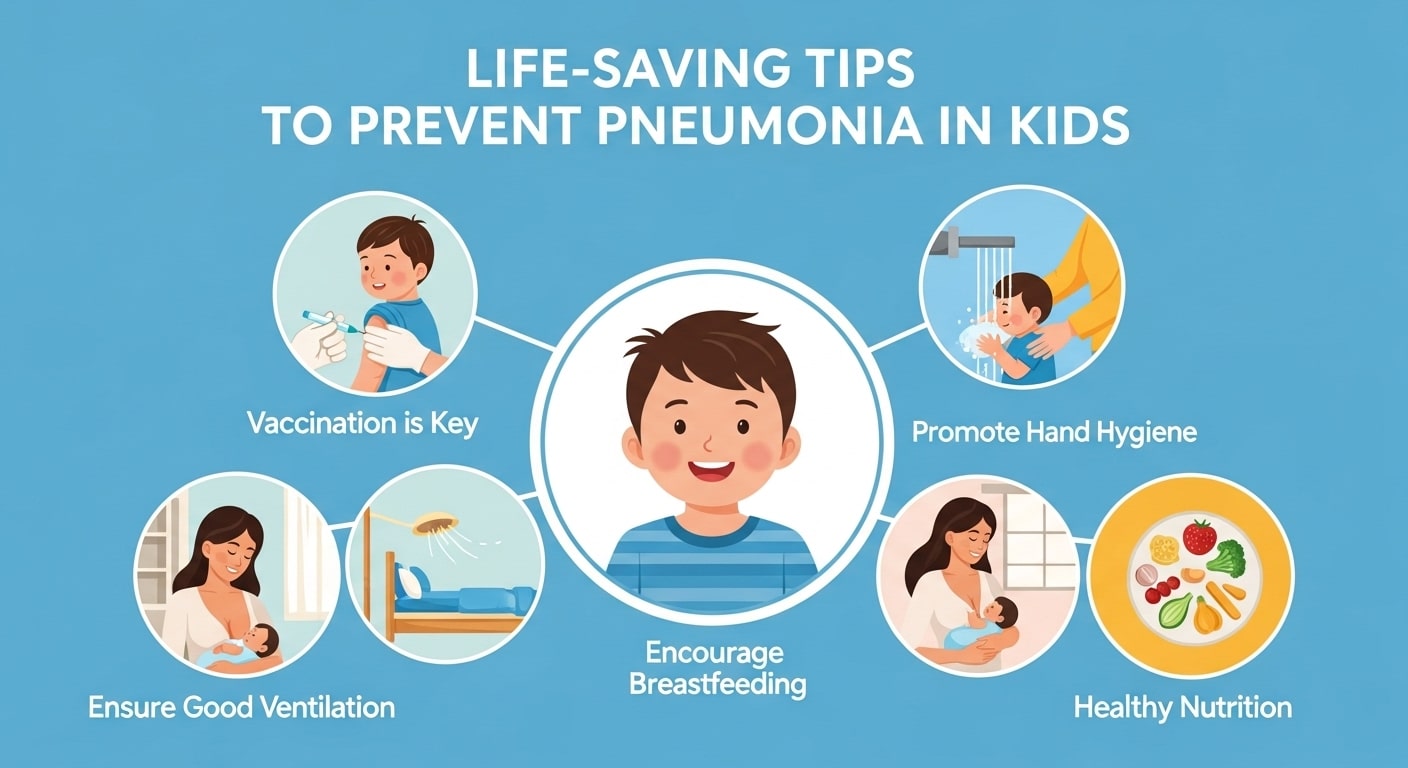
Children are more likely to get pneumonia than adults. For one thing, their Defense system is not yet mature, and secondly, pathogens such as bacteria or viruses are quickly transmitted from one child to another, especially between the ages of 3 and 6. That is why infections are generally very common in children. Babies and children under 6 years old are more likely to get pneumonia or other kinds of infections than school going children and teenagers.
The process usually proceeds as follows like an infection. In children pneumonia is usually not that complicated. In this blog we will guide you about life saving tips to prevent pneumonia in kids.
What symptoms occur with pneumonia?
To know how you can prevent your children from pneumonia. First you must have the knowledge about the symptoms that occur in this disease, which include:
- Regular fever
- Dry, irritating cough without phlegm
- General feeling of illness
- Headache
How can you prevent pneumonia?
There are two important categories of preventive measures. Following measures to protect against pneumonia:
- Primary prevention to maintain health
The flu vaccine can reduce the risk of pneumonia caused by the flu virus and should be administered according to the respective national recommendations.
- Secondary prevention after pneumonia
After pneumonia, smoking should be stopped if possible. We offer special smoking cessation courses for this purpose.
If you have started your treatment with antipsychotic medication or gastroprotective therapy, it should be checked whether this can be continued. This can be increase the risk of a recurrent pneumonia.
If you are already taking inhaled corticosteroid therapy due to chronic lung disease, you must consult your child specialist to determine whether it can be continued or discontinued.
Furthermore, people at higher risk, such as patients with immune disorders, elderly people and children, should avoid contact with those who are ill in order to reduce the risk of infection.
What are primary and secondary prevention?
When we talk about primary and secondary prevention from pneumonia we mean this:
- Primary prevention aims to prevent your kid from the development of a disease on the first priority. Vaccinations are part of primary prevention.
- Secondary prevention aims to detect diseases at an early stage, when effective treatment methods are available. For example, in cancer screening.
Five exercises for pneumonia prophylaxis at home
The simplest exercises to prevent your children from pneumonia prophylaxis can also be easily integrated into daily nursing care and basic care routines:
- Back massages while washing and applying lotion
- Stretching exercises for your kids
- Elevate upper body while you are sitting
- Close the left nostril with one finger and inhale, and gently press your lips together while exhaling.
How should I strengthen my kid’s immune system in pneumonia?
A strong immune system play a role like a shield against external pathogens. It ensures that cold, flu or pneumonia viruses cannot spread unchecked in the airways and lungs. If the immune system is functioning well, these viruses doesn’t develop in the first place. If it does, the illness is usually overcome within a few days.
There are everyday measures that strengthen our immune system. Whether these actually reduce the frequency of acute respiratory illnesses has not been definitively proven by studies.
Brief points of Conclusion
The infection is caused primarily by bacteria, but also by viruses and fungi. This disease cannot always be clearly diagnosed at first. Serious complications can occur if pneumonia in kids is left untreated. Treatment with antibiotics, preventive measures and multiple vaccinations can protect your children from pneumonia. Parents should also ensure that their children drink enough fluids. What makes infection and treatment difficult is that these bacteria are resistant to many antibiotics. Above we explain how parents can recognize the illness early and how to reduce the risk of infection.
Frequently Asked Questions about life saving tips to prevent pneumonia in kids
How can you recognize pneumonia in children?
When children develop pneumonia, symptoms they may experience fever, chills, coughing, and phlegm.
What examination method is used for pneumonia?
Following a physical examination:
- a chest X-ray
- a computed tomography (CT) scan
is usually performed to confirm the diagnosis.
Does pneumonia always require hospitalization?
No, not always. Mild cases, especially in patients who do not belong to the risk groups mentioned above, can also be treated on an outpatient basis
How long does the treatment for pneumonia take?
An improvement in the patient’s condition should be noticeable 48 to 72 hours after starting treatment. The length of the hospital stay depends on the patient’s recovery and any pre-existing conditions, it is usually three to ten days.
How long does the recovery process take for pneumonia?
Recovery process can vary from condition to condition, depending on the severity. The recovery process for pneumonia can take anywhere from 2 weeks to 3 months.


