

Epistaxis Definition and Meaning
If you’ve ever experienced a sudden nosebleed, you’ve already encountered epistaxis. In medical terms, epistaxis definition refers to bleeding from the nasal cavity caused by ruptured blood vessels inside the nose. These vessels are extremely delicate, and even minor irritation can trigger bleeding. The condition may look alarming, especially when the blood flow seems heavy, but in most cases, it is not life-threatening.
The epistaxis meaning becomes clearer when we break it down. The word originates from Greek, where “epi” means “upon” and “staxis” means “dripping.” So, epistaxis literally means “a dripping of blood from the nose.” While it can happen at any age, children and older adults are more commonly affected due to fragile nasal tissues. Understanding the basics helps reduce panic and allows for proper handling of the situation.
Epistaxis Meaning in Urdu
The epistaxis meaning in urdu is ناک سے خون آنا. یہ ایک عام مسئلہ ہے جو اکثر خشک موسم، ناک کو زور سے صاف کرنے، یا کسی چوٹ کی وجہ سے ہوتا ہے۔ بعض اوقات یہ کسی اندرونی بیماری کی علامت بھی ہو سکتا ہے، اس لیے اگر بار بار ہو تو ڈاکٹر سے رجوع کرنا ضروری ہے۔
Epistaxis Pronounce and Pronunciation
epistaxis (eh-puh-STAK-sis)
Many people struggle with epistaxis pronounce and epistaxis pronunciation because it sounds complex. However, once you hear it properly, it becomes easy to remember. Doctors frequently use this term in clinical settings, so learning how to pronounce it correctly can help you communicate more effectively in medical discussions.
What is Epistaxis? Understanding the Condition
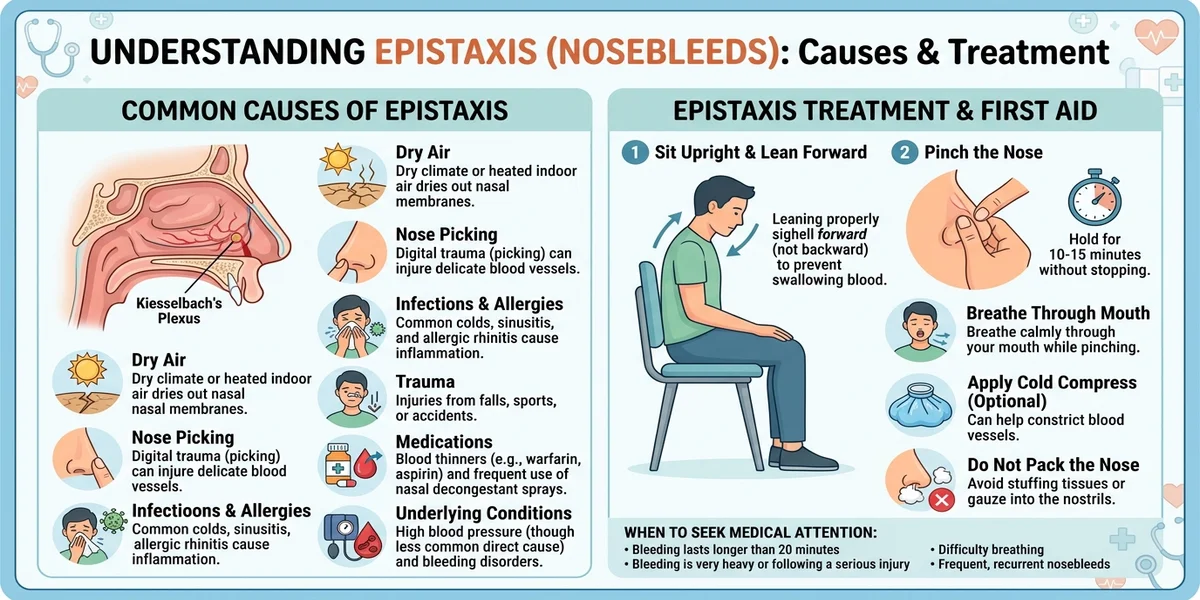
So, what exactly is epistaxis? It is simply bleeding from inside the nose, usually caused by damage to tiny blood vessels in the nasal lining. The nose contains a rich network of blood vessels, especially in the front part known as Kiesselbach’s plexus. This area is highly sensitive and responsible for most nosebleeds.
There are generally two main types of epistaxis:
Types of Epistaxis
Anterior Epistaxis: This is the most common type and occurs in the front of the nose. It is usually mild and easy to control.
Posterior Epistaxis: This type occurs deeper inside the nose and can be more serious, often requiring medical attention.
Understanding these types helps in identifying the severity of the condition and deciding whether home treatment is enough or professional care is needed.
Epistaxis Causes (Common and Serious)
When discussing epistaxis causes, it’s important to realize that they range from simple environmental factors to serious medical conditions. One of the most common causes is dry air, which can crack the nasal lining and lead to bleeding. Nose picking, allergies, and infections are also frequent triggers.
Other causes include:
High blood pressure
Nasal injuries
Blood clotting disorders
Excessive use of nasal sprays
Reasons for Epistaxis in Adults
The reasons for epistaxis in adults often differ from children. Adults may experience nosebleeds due to lifestyle factors such as smoking, alcohol consumption, or exposure to pollutants. Chronic conditions like hypertension also increase the risk.
Causes of Epistaxis in Children
The causes of epistaxis in children are usually less serious. بچوں میں ناک سے خون زیادہ تر ناک میں انگلی ڈالنے، الرجی، یا خشک موسم کی وجہ سے آتا ہے۔ بچوں کی ناک کی جھلی نازک ہوتی ہے، اس لیے معمولی چوٹ بھی خون بہنے کا سبب بن سکتی ہے۔
Most Common Cause of Epistaxis in Child
The most common cause of epistaxis in child is nose picking and dryness. Kids often unknowingly irritate the inside of their nose, leading to minor bleeding. In many cases, this type of epistaxis resolves on its own and does not require medical treatment.
Recurrent Epistaxis Causes
If someone experiences frequent nosebleeds, it may indicate underlying issues. Recurrent epistaxis causes include chronic sinus infections, structural abnormalities in the nose, or systemic diseases like anemia. In such cases, ignoring the condition can lead to complications, so medical evaluation becomes necessary.
بار بار ناک سے خون آنا کسی سنگین مسئلے کی نشاندہی بھی ہو سکتا ہے، جیسے کہ خون کی کمی یا بلڈ پریشر کا زیادہ ہونا۔
Epistaxis in Children – What Parents Should Know
Epistaxis in children is common and often harmless, but it can be frightening for parents. The key is to stay calm and manage the situation properly. Encourage children not to pick their nose and keep their nasal passages moist, especially during dry weather.
Parents should also monitor for warning signs such as frequent episodes, heavy bleeding, or associated symptoms like fatigue. These could indicate a more serious condition requiring medical attention.
Epistaxis Treatment and Home Remedies
When it comes to epistaxis treatment, most cases can be managed at home. Simple first aid measures can stop the bleeding effectively without the need for medication.
Some effective methods include:
Sitting upright and leaning forward
Pinching the soft part of the nose for 10–15 minutes
Applying a cold compress
How to Stop Epistaxis Quickly
If you’re wondering how to stop epistaxis, the key is to act quickly and calmly. Avoid tilting the head backward, as this can cause blood to flow into the throat. Instead, lean forward and apply pressure to the nostrils.
یہ طریقہ نہ صرف خون کو روکنے میں مدد دیتا ہے بلکہ مریض کو گھبراہٹ سے بھی بچاتا ہے۔
Epistaxis Management in Clinical Settings
In more severe cases, epistaxis management requires medical intervention. Doctors may use techniques such as nasal packing, cauterization, or medications to control the bleeding.
Emergency Management of Epistaxis
The emergency management of epistaxis is critical when bleeding is heavy or does not stop. In such situations, immediate medical care is essential. Hospitals are equipped with advanced tools to locate and stop the bleeding source effectively.
Prevention Tips to Avoid Epistaxis
Preventing epistaxis is often easier than treating it. Keeping the nasal passages moist and avoiding irritation can significantly reduce the risk. Use a humidifier during dry seasons and stay hydrated.
ناک کو زیادہ زور سے صاف کرنے سے گریز کریں اور اگر الرجی ہو تو اس کا بروقت علاج کروائیں۔
When to See a Doctor
While most cases are harmless, there are times when medical attention is necessary. Seek help if:
Bleeding lasts longer than 20 minutes
Nosebleeds occur frequently
There is significant blood loss
These symptoms may indicate a more serious condition requiring professional care.
Doctorlink Consultation Details
If you or your loved ones are dealing with frequent epistaxis, don’t ignore it. Professional guidance can help identify the root cause and provide effective treatment.
Doctorlink
📞 Phone: 03114142033
📧 Email: info@doctorlink.pk
📍 Address: 7, Block M Johar Town Near Khokhar Chowk
Book your consultation today and take control of your health with expert care.
Conclusion
Understanding epistaxis causes, symptoms, and treatment options empowers you to handle this common condition confidently. While most nosebleeds are minor, recognizing when they signal something more serious is crucial. Proper care, timely intervention, and preventive measures can make a significant difference in managing and avoiding epistaxis effectively.
FAQs
1. What is epistaxis?
Epistaxis is a medical term for nosebleed, caused by ruptured blood vessels in the nose.
2. What are the main causes of epistaxis?
Common causes include dry air, nose picking, allergies, and high blood pressure.
3. How to stop epistaxis at home?
Sit upright, lean forward, and pinch the nose for 10–15 minutes.
4. Is epistaxis dangerous?
Most cases are harmless, but frequent or heavy bleeding may require medical attention.
5. What is epistaxis meaning in Urdu?
Epistaxis means ناک سے خون آنا, which refers to bleeding from the nose.


