

What is Myalgia?
Myalgia Meaning
Myalgia is a medical term used to describe muscle pain. Almost everyone experiences muscle discomfort at some point in life, whether after a tough workout or due to an illness. But when that pain becomes frequent or persistent, it falls under the category of myalgia. Think of your muscles like elastic bands—when stretched too much or inflamed, they hurt and lose flexibility. This pain can affect one specific area or spread throughout the body depending on the cause.
Muscle pain can range from mild soreness to severe discomfort that interferes with daily activities. Sometimes it’s temporary and harmless, but other times it may signal an underlying health condition. That’s why understanding myalgia meaning is crucial for early diagnosis and proper treatment.
Myalgia Meaning in Urdu
In Urdu, myalgia meaning in Urdu is “پٹھوں کا درد”. This term is widely used in medical discussions across Pakistan, especially when patients describe body aches caused by infections, stress, or fatigue. Understanding this translation helps patients communicate symptoms more effectively with healthcare providers.
Types of Myalgia
Epidemic Myalgia
Epidemic myalgia is a rare but painful viral condition, often caused by Coxsackievirus. It spreads in outbreaks and leads to sudden, sharp muscle pain, especially in the chest and abdomen. The pain may feel like intense cramps or spasms and can last for several days. This condition is sometimes referred to as “Bornholm disease.”
Chronic Myalgia
Chronic myalgia persists for weeks or even months. It is often associated with conditions like fibromyalgia or autoimmune disorders. Unlike acute pain, chronic muscle pain can affect mental health, sleep, and overall quality of life, making early management essential.
Myalgia Causes
Common Causes
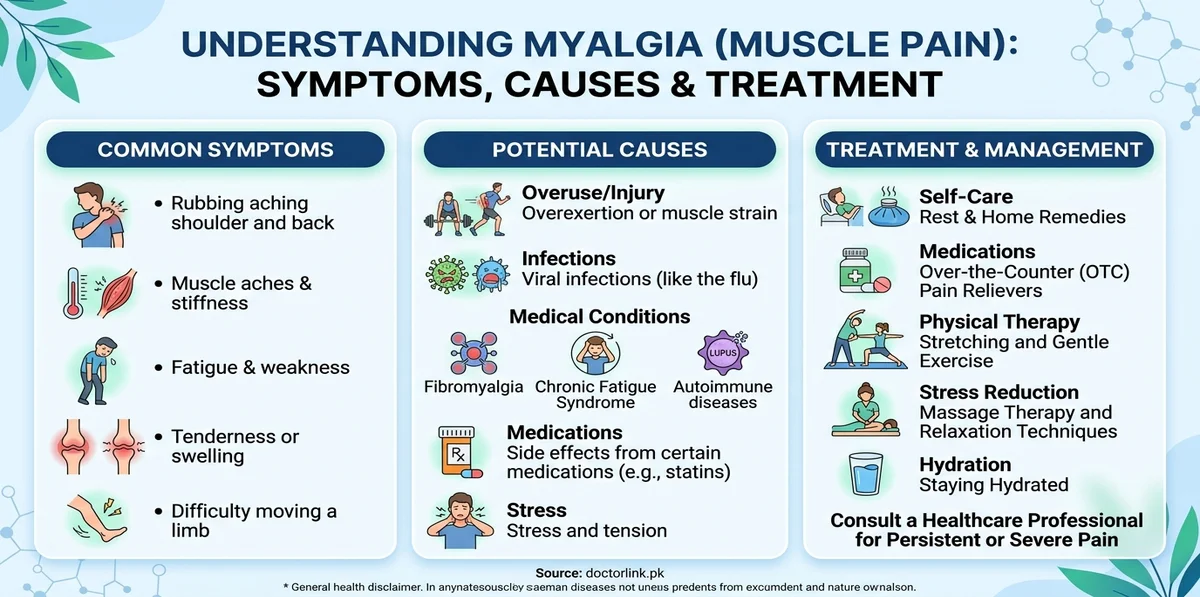
There are several myalgia causes, and most are related to everyday activities or minor health issues. Overuse of muscles, injuries, stress, and dehydration are among the most common triggers. Even something as simple as sitting in the wrong posture for hours can lead to muscle pain.
Medical Conditions Linked to Myalgia
More serious causes include infections like flu, COVID-19, or dengue fever. Chronic conditions such as lupus, fibromyalgia, and thyroid disorders can also lead to persistent muscle pain. In some cases, medications like statins may cause muscle discomfort as a side effect.
Symptoms of Myalgia
Myalgia Chest Pain
One alarming symptom is myalgia chest pain. This type of muscle pain occurs in the chest wall and is often mistaken for heart-related issues. However, unlike cardiac pain, it usually worsens with movement or pressure and improves with rest.
General Muscle Pain Signs
Other symptoms include stiffness, tenderness, swelling, and weakness in muscles. Some people also experience fatigue and difficulty performing routine tasks. The intensity of symptoms often depends on the underlying cause.
Arthralgia and Myalgia
Key Differences
Arthralgia and myalgia are often confused, but they are different. Arthralgia refers to joint pain, while myalgia refers to muscle pain. Imagine joints as hinges and muscles as ropes—both are essential but serve different roles.
Combined Conditions
In some illnesses like viral infections or autoimmune diseases, both conditions occur together. This combination can make diagnosis tricky, requiring careful medical evaluation.
Myalgia and Myopathy
Understanding Myopathy
Myopathy is a condition where muscle fibers do not function properly, leading to weakness. Unlike temporary pain, myopathy is often chronic and progressive.
Differences Explained
While myalgia myopathy may sound similar, myalgia is mainly about pain, whereas myopathy involves muscle weakness and structural issues. Proper diagnosis is essential to differentiate between the two.
Diagnosis of Myalgia
Clinical Examination
Doctors begin with a physical examination and detailed medical history. They assess the location, duration, and severity of pain to determine possible causes.
Lab Tests & Imaging
Blood tests, X-rays, and MRIs may be used to identify infections, inflammation, or muscle damage. These tests help rule out serious conditions.
ICD-10 Code for Myalgia
Myalgia ICD 10 Details
The icd 10 code for myalgia is M79.1. This classification is used globally for medical billing and documentation. The myalgia icd 10 code helps healthcare providers accurately record and track muscle pain cases.
Treatment Options
Home Remedies
For mild cases, rest, hydration, and warm compresses can provide relief. Gentle stretching and massage therapy also help improve blood circulation and reduce pain.
Medical Treatments
Doctors may prescribe pain relievers, anti-inflammatory drugs, or muscle relaxants. In chronic cases, physical therapy and lifestyle changes are recommended.
Prevention Tips
Preventing muscle pain is easier than treating it. Staying hydrated, maintaining proper posture, and exercising regularly can significantly reduce the risk. Avoid overexertion and ensure adequate rest after physical activity.
When to See a Doctor
If muscle pain persists for more than a week, worsens, or is accompanied by fever, swelling, or weakness, it’s time to seek medical attention. Early diagnosis can prevent complications.
Get Expert Help – Doctorlink
If you are experiencing persistent myalgia, don’t ignore it. Professional care can make all the difference.
📞 Phone: 03114142033
📧 Email: info@doctorlink.pk
📍 Address: 7, Block M Johar Town Near Khokhar Chowk
Our experienced doctors provide accurate diagnosis and effective treatment plans tailored to your needs.
Conclusion
Myalgia is more than just ordinary muscle pain—it can be a signal from your body that something needs attention. From simple causes like overuse to complex medical conditions, understanding the symptoms and triggers is essential. Early diagnosis, proper treatment, and preventive care can help you manage muscle pain effectively and improve your quality of life. Paying attention to your body and seeking timely medical advice ensures that minor discomfort doesn’t turn into a major health issue.
FAQs
1. What is the main cause of myalgia?
The most common causes include muscle overuse, stress, infections, and underlying medical conditions.
2. What is myalgia meaning in Urdu?
It means “پٹھوں کا درد,” referring to muscle pain.
3. What is the ICD-10 code for myalgia?
The official code is M79.1, used for diagnosis and billing.
4. Is myalgia dangerous?
Most cases are harmless, but persistent pain may indicate serious conditions and should be evaluated by a doctor.
5. What is the difference between arthralgia and myalgia?
Arthralgia refers to joint pain, while myalgia refers to muscle pain.


